
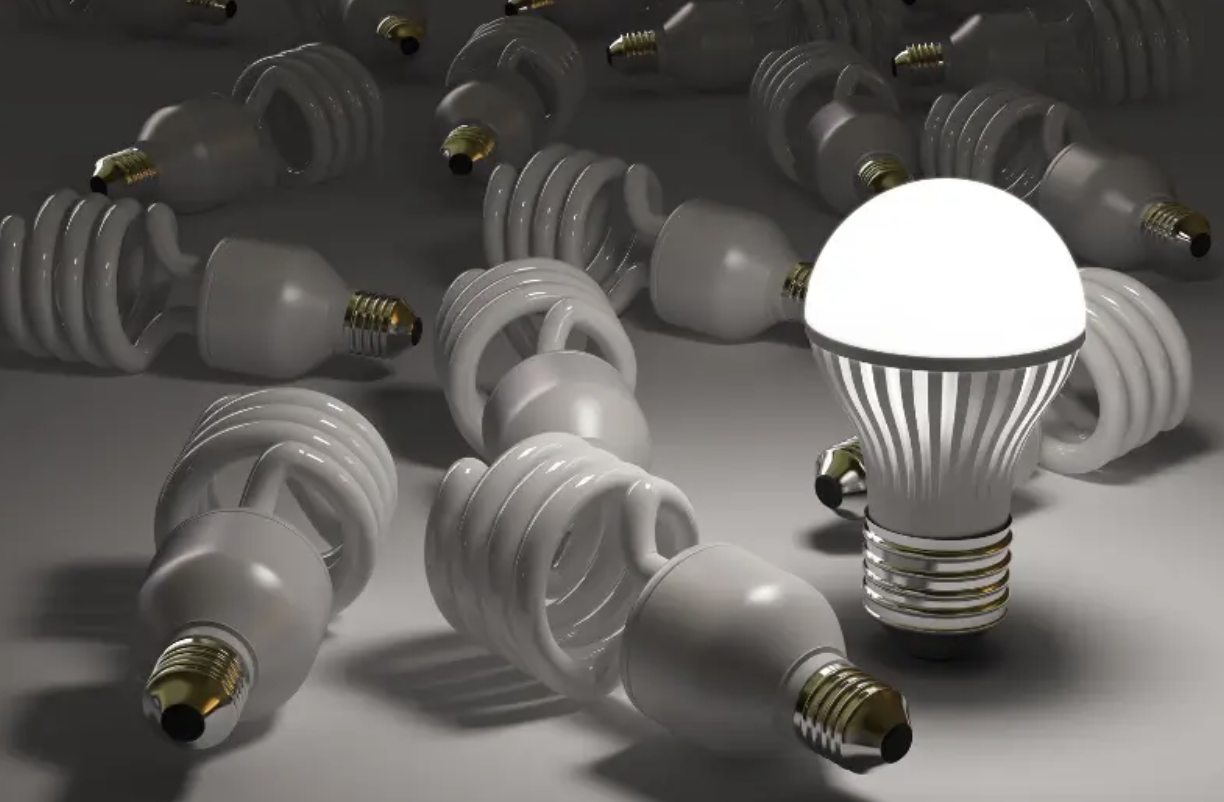
Fluorescent lighting is everywhere; it’s energy-efficient and long-lasting. However, it has gained a notorious reputation due to its nauseating brightness. Seven hours under harsh, bright lighting and the normalization of eye strain and migraines have become widely accepted among students and the working class. Sadly, many people aren’t aware of how lighting works and affects us daily, which significantly impacts our productivity.
Not only does fluorescent lighting have a physical effect, but it also has an emotional effect.
The visual factor of the school plays an important role in focus during school hours.
One of the main issues with fluorescent lights is how they constantly flicker. Although lighting technology has improved over the years, flickering is still noticeable and can be perceived by the brain, even in subtle cases. One of the most common effects of flickering is eyestrain, headaches, and fatigue. Another reputable cause of fluorescent lighting is general stress and a heightened nervous system.
In an article by Paclights on Fluorescent Lights Are Flickering: How It Affects Lighting Projects: Engineer’s Guide it says, “In educational settings, flickering lights have been linked to reduced attention spans and increased irritability among students.”
Another factor of fluorescent lighting is health and safety concerns. The lighting can expose you to mercury and UV radiation.
According to the article by Future Energy Solutions, Are Fluorescent Lights Bad for You? 5 Dangers & Side Effects,
“Typical fluorescent tubes contain approximately 2 to 5 milligrams of mercury. If broken, the mercury in this artificial light vaporizes and, if inhaled, can be extremely harmful to the lungs, nervous system, and kidneys.”
Not only does fluorescent lighting pose a mental risk, but it can also cause bodily consequences.
In recent years, migraines have become a notable issue in adults and students. Many with the chronic disorder are light-sensitive, and fluorescent lighting can amplify the effects of migraines.
In an interview with CHS Sophomore, Sarah Herz, she notes, “I really don’t like it because it causes headaches for me.”
In an article published by Valley Heating, “In a study conducted by the Cincinnati Children’s Hospital Medical Center, researchers noted that people who get frequent migraines are often ‘photophobic,’ or more sensitive to light.”
Additionally, fluorescent lighting is not the only factor; other environmental factors, such as poor air quality, glaring computer screens, and high stress levels, also contribute to migraine symptoms. Many are left with few options in such a confined environment.
Sophie Green, CHS Sophomore, says, “I think both are really important. You need a mix because you want to be focused in school, but you can’t be focused if you’re not comfortable.”
Although fluorescent lights are considered good for concentration, they are actually poor at sustaining focus, leading to mental fatigue and eye strain.
Conversely, numerous solutions can significantly decrease the effects of fluorescent lighting.
In an article conducted by Pedagogy, The Dark Side of Modern Lighting: Health Risks and Fluorescent and LED Bulbs, “A study commissioned by the California Public Utilities Commission found that children in classrooms with natural daylight performed significantly better than those in artificially lit environments.”
Replacing fluorescent lighting with incandescent light bulbs, which resemble natural sunlight, creates a calmer, cozier environment, unlike cooler lights, which emit harsh fluorescents. Furthermore, new incandescent lights use less energy while still delivering the same warm light. They are also flicker-free, reducing headaches and promoting melatonin production.
Lighting is important; it’s one of the most significant inventions that we use. What’s also important is the environment we work in every day; an uncomfortable, harsh atmosphere is detrimental to our health and well-being. The normalization of discomfort, whether at work or at school, is unfair to society and should be changed to prioritize health, which can catch up to us as easily as a deadline.