

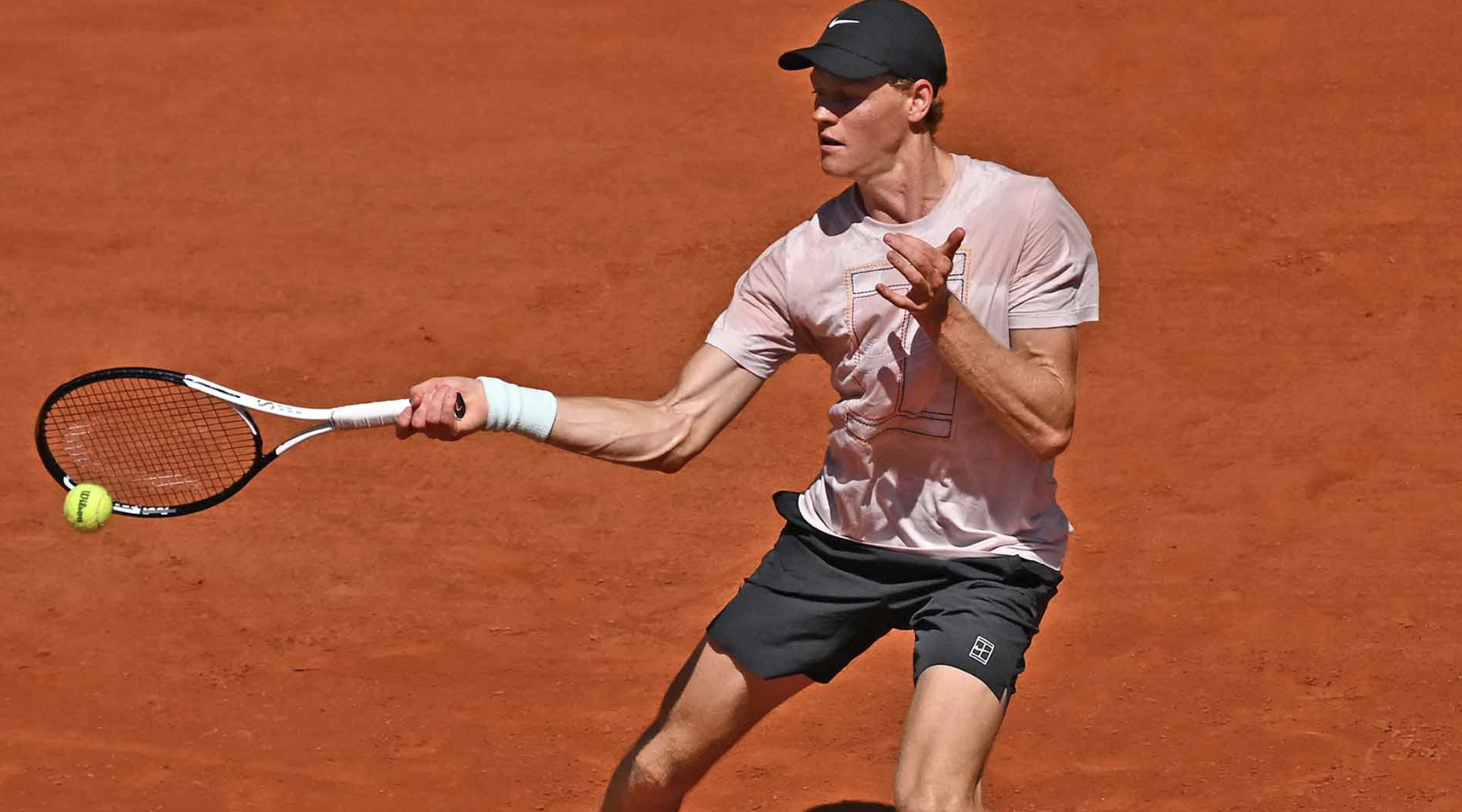
Coming into Roland Garros, Jannik Sinner looked nearly unstoppable. The Italian world No. 1 entered the French Open riding a 30-match winning streak and had established himself as the dominant force in men’s tennis. Following a dominant clay-court season, many viewed Sinner as the clear favorite to capture his first French Open title and complete a career Grand Slam. Even on a surface that had historically belonged to Rafael Nadal and more recently Carlos Alcaraz, Sinner appeared ready to take control of Roland Garros. That confidence seemed justified early in his second-round match against Argentina’s Juan Manuel Cerúndolo.
Sinner cruised through the opening stages of the contest, winning the first two sets 6-3, 6-2 and building a commanding 5-1 lead in the third. With the finish line in sight, few could have imagined what would happen next. The top seed was one game away from advancing comfortably to the third round and continuing his pursuit of the title. However, the match quickly took an unexpected turn.
As temperatures climbed into the low 90s Fahrenheit (33 Celsius), Sinner began showing visible signs of physical distress. He repeatedly bent over between points, appeared short on energy, and eventually required medical attention. What had looked like another routine victory quickly turned into a battle for survival. Cerúndolo sensed the shift and began extending rallies, forcing the exhausted Sinner to move more and more around the court. Momentum quickly swung in the Argentine’s favor as he mounted an unlikely comeback.
While many observers pointed directly to the extreme heat, Sinner later suggested illness may have played a larger role. He told reporters that he had been feeling unwell before stepping onto the court and insisted the weather alone was not responsible for the defeat. Still, the conditions became one of the major storylines of the tournament, with multiple players struggling through the Paris heatwave and questions arising about the French Open’s heat policies.
Regardless of the exact cause, the result served as a reminder that even the best athletes have limits. Tennis fans often view stars like Sinner as machines because of their consistency and dominance, but Roland Garros offered a different picture. On one of the biggest stages in the sport, the world’s top-ranked player was unable to overcome the physical challenges he faced as Cerúndolo took advantage of the shift in momentum.
For Sinner, the loss is undoubtedly disappointing. Yet at just 24 years old and already the owner of multiple Grand Slam titles, there is little reason to believe this setback will define him. Instead, it may become just another chapter in the career of a player who has repeatedly bounced back from adversity.
Although the defeat ended his Roland Garros run earlier than expected, Sinner remains one of the sport’s brightest stars. With many years still ahead of him, he will likely have more opportunities to contend for a French Open title. For now, however, Roland Garros will be remembered for one of the tournament’s most surprising upsets and Cerúndolo’s remarkable comeback victory.