

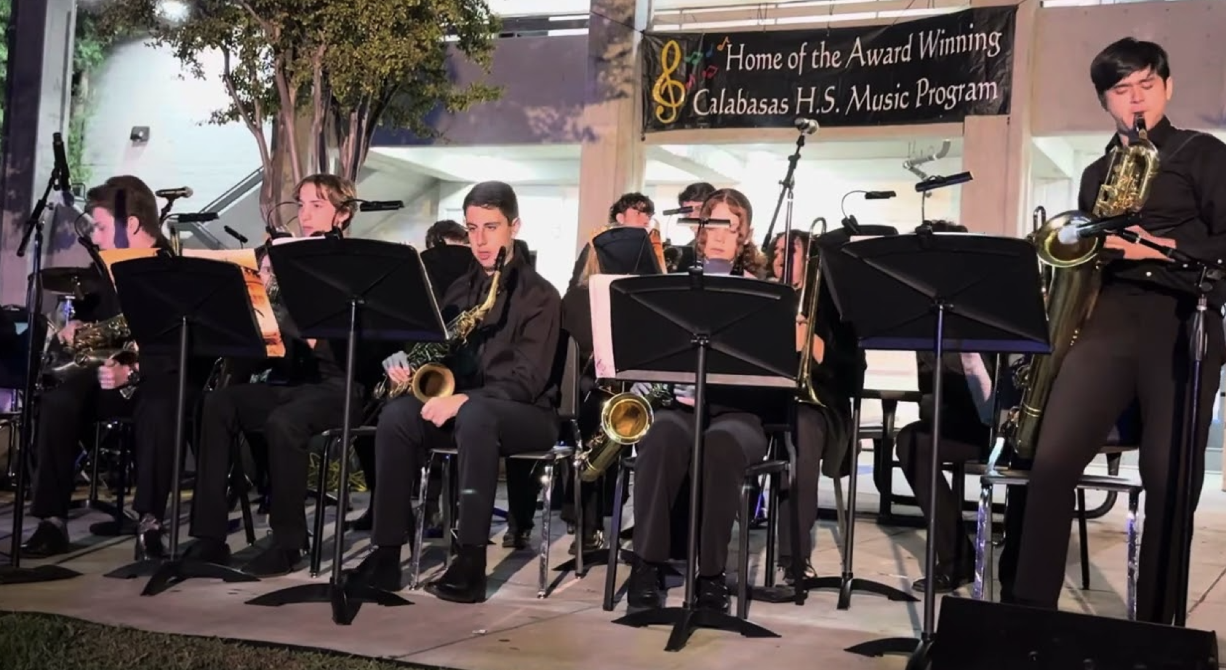
For many students in the Calabasas High School jazz program, the Reno Jazz Festival is more than just another performance; it is an opportunity to perform in front of judges, learn from professional musicians, and connect with students from across the country. However, after attending the festival regularly since 2009, the CHS music program was unable to participate this year due to low attendance and fundraising challenges.
According to CHS music teacher Aaron Kohen, the decision came down to the number of students who were able to commit to the trip.
“Basically, not enough students were able to attend the festival due to a variety of factors,” Kohen said. “This has been a festival we attend every other year or so since 2009, and some years it just doesn’t line up well with students’ activities and lives.”
Because the festival requires full ensembles to perform, the reduced participation made attending unrealistic.
“We only do the festival if we have a full band,” Kohen explained. “This year the Jazz A Band is 23 students and only 15 could attend. The B Band has 17 students and only 8 could be there.”
Junior jazz student Ray Lally also pointed to fundraising struggles as a major factor in the cancellation.
“We had the chance to go to the Reno Jazz Festival this year, but we couldn’t because we didn’t raise enough money,” Lally said.
Lally believes lower student involvement contributed to those fundraising difficulties.
“A big reason was lower student involvement,” he said. “Some people lost passion for the program, so fewer students were helping with fundraising.”
For many students, the cancellation was disappointing because of everything the festival offers. Senior Elie Samouhi, who attended Reno as a sophomore, described it as a unique experience that goes far beyond a normal school performance.
“It’s a big music festival where high school bands, college groups, and professional musicians all come together to perform,” Samouhi said. “There are performances, clinics, and chances to watch really high-level musicians.”
During the festival, students perform for judges and immediately receive feedback from professional clinicians.
“You play your set for a panel of judges, and then right after, you get feedback and work with a professional musician in a clinic,” Samouhi explained. “They give you advice, help fix things in your performance, and show you how to improve.”
Samouhi said one of the most memorable parts of the festival was learning from working musicians, including Los Angeles saxophonist Nicole McCabe.
“I learned a lot about performance, like how to play with more confidence and how to improve as a musician overall,” he said.
Beyond the performances themselves, Reno also creates opportunities for students to meet other young musicians.
“You meet people from other schools just by being there, watching performances, and talking during the event,” Samouhi said. “I actually met people I still keep in touch with.”
Although students were disappointed to miss the festival this year, Lally believes the setback could motivate the program moving forward.
“It showed me that when the culture isn’t strong, opportunities like this start to disappear,” Lally said. “If we rebuild that sense of pride and get more people engaged again, things like Reno will come back.”