


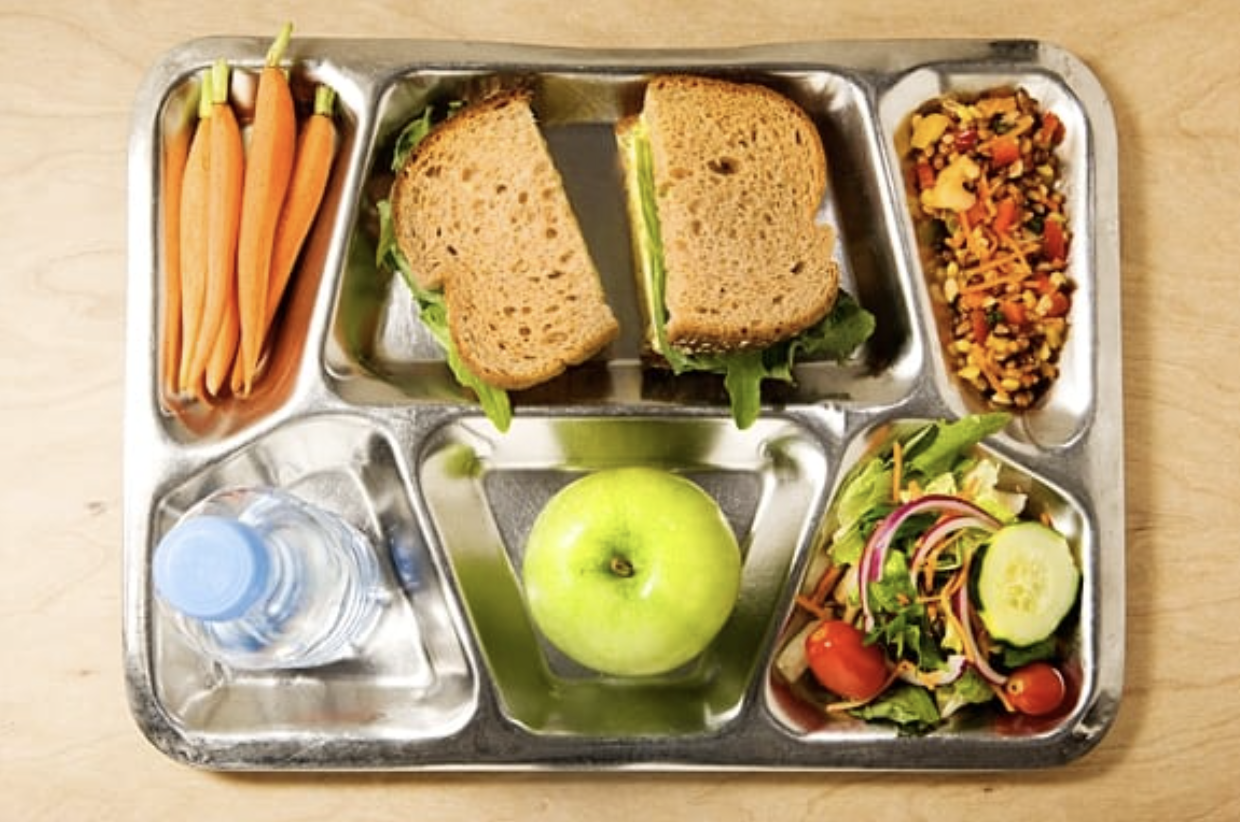
Lunch is often seen as a simple break in the school day, but for many high school students, what they eat and where they eat it can have a noticeable impact on their mood and focus in the class periods that follow. At Calabasas High School, upperclassmen in good standing have the option to eat on campus in the cafeteria or go off campus and choose their own meals, creating two very different lunchtime experiences.
Students who eat in the cafeteria often rely on quick, free, familiar options that are easy to grab during a short lunch period. CHS senior Tegan Scott, who regularly eats on campus, says her lunch usually consists of simple items.
“I usually just get an apple and the Pillsbury mini-cinnis,” said Scott.
While her meal is small, Scott says it gets her through the day. For some students, lighter cafeteria meals can help them feel more alert and ready to focus in their next class.
“I don’t feel super full, but I also don’t feel sluggish,” Scott explained. “It’s enough to keep me going.”
On the other hand, students who leave campus for lunch have more freedom. CHS senior Ava Tzour, who regularly goes off campus, enjoys being able to choose whatever food she wants.
“I like being able to get whatever I’m craving that day,” said Tzour. “It makes lunch feel more relaxing.”
However, that freedom can sometimes come with drawbacks. Heavier or less balanced meals may leave students feeling tired and the time-crunch often makes for tardy returns to class. While off-campus lunch can be more enjoyable, the aftereffects can vary depending on where and what students choose to eat.
Teachers have noticed that students’ energy levels after lunch can differ widely. Some students return to class refreshed and ready to participate, while others struggle to stay engaged, especially during longer afternoon periods. Nutrition and mood are closely connected, and what students eat during lunch can influence their concentration, patience, and motivation. Balanced meals with fruits and lighter foods may help students stay alert, while heavier meals sometimes lead to decreased energy and focus.
Despite the differences, both lunch options provide students with a chance to reset during the day. As students continue to balance busy schedules and academic demands, lunch choices may play a bigger role than expected in supporting both mental focus and overall well-being during the school day. Whether students eat in the cafeteria or go off campus, lunch remains an important part of the school experience that can shape how they feel and perform in their next class period.